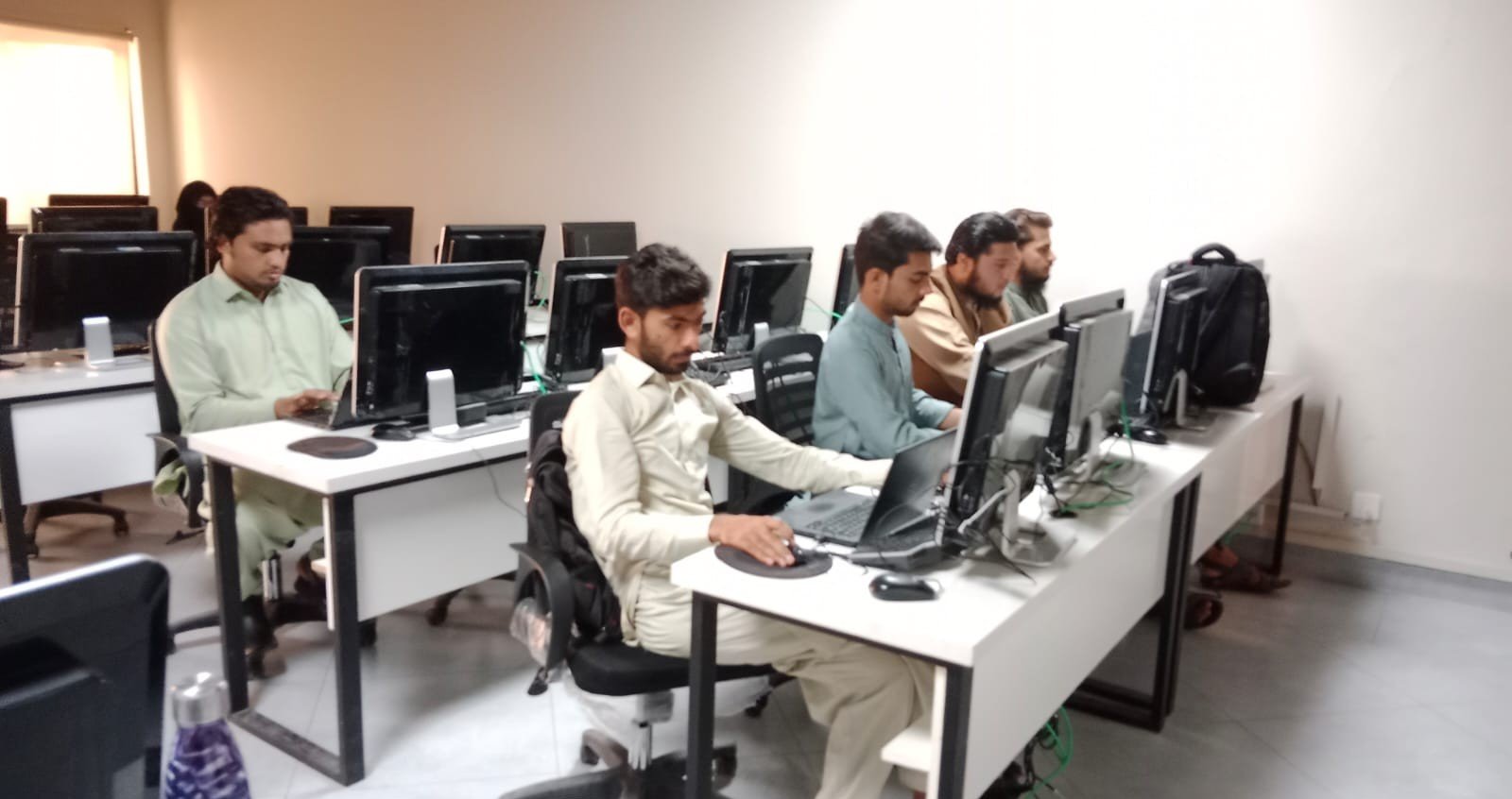
You finished your degree. You printed your CV, applied everywhere, asked every relative for a reference — and months later, there is still no job after graduation in Pakistan for you.
Hear this first: it is not proof that you are incapable. It is usually proof of a gap — between what a degree teaches and what an employer can actually use on day one. And that gap can be closed in weeks, not years.
Short answer: Most graduates in Pakistan stay unemployed not because jobs don’t exist, but because degrees teach theory while employers hire proven skills. The fix is short and practical: pick one in-demand digital skill, learn it through real projects in 6–8 weeks, build proof of work, and apply or freelance with evidence — not just a degree.
Why a Degree Alone No Longer Gets You Hired
A degree certifies that you studied a subject. It does not show an employer what you can do. When a Rawalpindi business hires a marketing assistant, they need someone who can run a Facebook ad, design a post, or update a website on the first morning — not someone who can define marketing from a textbook.
Three things usually go wrong for fresh graduates:
- Every CV looks the same. Same degree, same “MS Office and internet” skills line, no portfolio, no project, nothing to check.
- Interviews test practical work. Employers increasingly ask candidates to show something — a design, a page, a campaign, a sample — and theory-only candidates have nothing to show.
- The graduate waits instead of building. Months pass applying for the “perfect” job while the skills gap stays exactly the same.
The Skills Employers Actually Hire For
Look at what local businesses and online clients pay for every week: social media marketing and ads, graphic design for posts and brands, websites for shops and services, freelancing services on Fiverr and Upwork, and now AI tools that make all of this faster. These are not degree subjects — they are short, practical skills you can learn to a working level in 6–8 weeks.
The good news: you don’t need all of them. One skill, learned properly with real projects, is enough to change your CV from “fresh graduate” to “person who can do this work — here is the proof.”
The Practical Fix: A 90-Day Plan
Step 1 — Pick ONE income skill (week 1)
Choose based on your interest: earning-focused students usually start with freelancing, creative students with graphic design, business-minded students with digital marketing. Do not try to learn five things at once — that is how most people stay stuck.
Step 2 — Learn it practically, with projects (weeks 2–8)
Watching random videos rarely works because there is no sequence, no feedback and no finished work at the end. Learn in a structured way where every topic ends in something you made: a gig, a design, a campaign, a page.
Step 3 — Build proof of work (weeks 6–10)
Create a small portfolio: sample projects, a live Fiverr gig or an Upwork profile, designs or pages you can link to. Employers and clients trust proof they can see far more than marks on a transcript.
Step 4 — Apply with evidence (weeks 8–12)
Apply for jobs and freelance work at the same time, leading with your portfolio link. Even a modest first project — paid or practice — breaks the “no experience” loop, because now you have experience.
A Guided Path If You Don’t Want to Do It Alone
If self-learning has already failed you once, a structured course is the shortcut. At Digitech Institute, Bahria Town Phase 8, Rawalpindi, the Freelancing Course was built for exactly this situation: 6 weeks, 12 practical classes, fee Rs 15,000, covering how to choose a skill and niche, create high-ranking Fiverr gigs, write winning Upwork proposals, handle clients and receive payments in Pakistan. It ends with a final project — your own live Fiverr gig and Upwork profile, plus a 30-day action plan. Classes are physical at the institute and also available online, and you receive a verifiable certificate. Digitech has trained 6000+ students with this practical, project-based approach.
Browse all options on the Courses page, or ask us anything on the Contact page.
Still deciding which skill fits your degree? Message us on WhatsApp at 0311-3774804 — tell us your qualification and interest, and we’ll honestly suggest the shortest path for you. No pressure, no obligation.
FAQs
I have a degree — should I do a short course or keep applying for jobs?
Do both, but change what you apply with. Six weeks of skill training while you apply means that by next month you are applying with a portfolio instead of an empty CV — which is what actually changes replies.
Which skill gives the fastest first income?
For most beginners, freelancing built on one service skill (design, marketing, writing, web) is fastest because you can sell to clients worldwide instead of waiting for one local vacancy. The right choice still depends on your interest — a skill you enjoy is the one you’ll finish learning.
Can I join if I don’t live in Rawalpindi?
Yes. Digitech courses run physically at Bahria Town Phase 8 and online as well, with a verifiable certificate either way. Call or WhatsApp 0311-3774804 for current batch timings.

1 Comment.